Fixed by: mechanical contractorRead the story →
Retro-Commissioning·For engineering & commissioning partners
Retro-commissioning that does the investigation for you.
PEAK is the Full Loop Building Operations System for commissioning firms. It connects to your client's existing BMS, surfaces the faults an investigation would take weeks to find, and drives every one through to verified action - because your engineers' judgement is what the client is paying for. Everything else is overhead.

PEAK · RCx engagement
Engagement findings · ranked by impact
All systemsAll prioritiesExport report
Faults found
31
Diagnosed
31
In implementation
9
Verified fixed
22
#EquipmentFaultProbable causeImpactEvidenceStatus
1AHU-03Running outside occupied hoursSchedule overridden at BMSTrend · 14 daysVerified fixed
2CH-01Chilled water valve huntingControl loop tuningTrend · 7 daysImplementing
3AHU-07Economiser not modulatingDamper actuator failedTrend · 21 daysAssigned
4VAV-L4-12Simultaneous heating and coolingReheat valve passingTrend · 7 daysAssigned
5AHU-02Supply air temperature sensor driftSensor out of calibrationTrend · 30 daysDiagnosed
One engagement, four steps
01
Investigated
Ranked fault list on day one
02
Evidenced
On the client's own trend data
03
Implemented
Assigned and chased to close
04
Verified
Fixed, and stays fixed
What is retro-commissioning?
Retro-commissioning (RCx) is a systematic process for returning an existing building's systems to the performance they were designed to deliver - finding the faults, fixing them, and verifying the result.
CIM PEAK is retro-commissioning software that runs the full loop: fault detection and diagnostics to find the issues, workflow to close them, and continuous monitoring to verify the savings hold.
The investigation gap
40%
of air handling units are carrying a fault on any given day.
Lawrence Berkeley National Laboratory, analysis of more than 60,000 pieces of HVAC equipment. In an RCx engagement, finding them by hand is what consumes the margin.
The hardest part of RCx isn't the fixing. It's the finding.
A typical engagement spends most of its budget on investigation - pulling trend logs, chasing point names, walking plant and reverse-engineering what the BMS has been quietly doing wrong for years.
Investigation by hand
1Trend logs pulled
Reconciled by hand, point names chased across vendors.
2Report lands
Months after kickoff, with weeks of billable hours spent.
3Building drifts
The engagement ends and the savings quietly erode.
Investigation on PEAK1Connected
To the existing BMS - any vendor, including legacy and serial.
2Ranked on day one
Diagnosed, with probable cause and cost.
Verified fixed
Every resolved fault confirmed in the closeout report.
How an engagement runs on PEAK
Finding is step one.
Investigate in days rather than weeks, implement with evidence rather than opinion, and verify that every fix actually landed. The difference between "we recommended 31 actions" and "we resolved 31 actions".
01
Investigate
PEAK connects read-only to the client's existing BMS and returns a ranked, diagnosed fault list with probable cause and cost - before your engineers walk the plant.
Day one
02
Recommend
The AI recommends; your engineers decide. Every recommendation carries the client's own trend data as evidence, so scope discussions rest on their data rather than judgement calls they can push back on.
Client's own data
Most RCx engagements stop at the reportWhere PEAK keeps going
Where PEAK keeps going03
Implement
Findings become actions your team owns - assigned, escalated and closed out, with every fix attributed and on the record. The client relationship stays with your firm.
Tracked to close
04
Verify
PEAK confirms each fault cleared and stays cleared after handover, and catches the drift that quietly erases retro-commissioning savings.
Stays connected
The three commissioning models
RCx, MBCx and ongoing commissioning.
The three models differ in one respect above all: how long the monitoring stays on after the engagement ends. That decides whether the savings last - and whether the work recurs.
Capability
Retro-commissioning
Point in time
Monitoring-based
Continuous

Full loop
Returns systems to intended performance
✓
✓
✓
Monitoring continues after the project closes
-
✓
✓
Faults raised as they appear
-
✓
✓
Most commissioning stops here
Keeps goingAssignment and escalation built in
-
-
✓
Every fault tracked to close-out
-
Partial
✓
Proof the fix held, on data the client can see
-
-
✓
What it means
Savings decay as the building drifts back
A project becomes a recurring service line
A service you can prove, year after year
What partners get

Savings that hold
Monitoring stays on after handover, so drift is caught before it erodes the result.

Recurring revenue
The RCx project becomes an ongoing service with the same client.

5x engineer capacity
The same team covers five times the sites.

Credit for every fix
Each resolved fault is verified and attributed to your team.
Proof in production
What it looks like when the loop closes
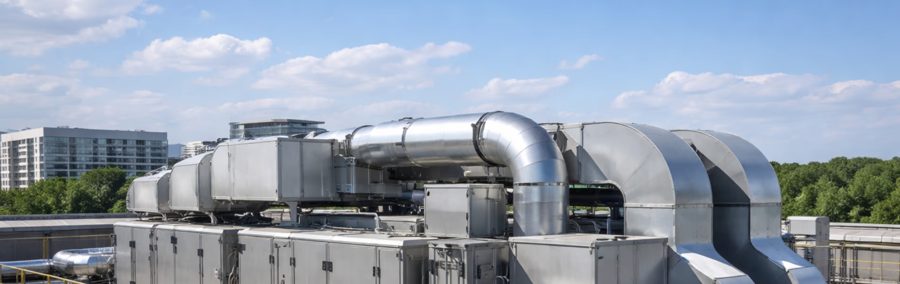
Investigation speed3 days24/7 AHU failure, found and fixedPEAK flagged the failed AHU as critical and routed it straight to the mechanical contractor - no manual triage, no diagnostic site visit.

Energy reduction33%Rectifying overnight operationBMS time schedules were starting fan coil units at 3am and running extract fans all weekend. Corrected schedules cut main plant energy by more than a third.
Fixed by: facilities managerRead the story →

Drift prevented8%Overrides left on after a fire testSystems left on manual override ran overnight unseen. PEAK alerted in real time and contractors corrected it within a day.
Fixed by: site contractorsRead the story →
 Capterra
4.8
Read PEAK reviews →Continuous FDD delivers a median 8% energy saving across the industry.
Lawrence Berkeley National Laboratory, study of 550 buildings. Without monitoring after handover, RCx savings decay.
Free guide
How FDD unlocks growth for engineering consultancies
For firms turning commissioning projects into a recurring service line on top of fault detection and diagnostics.
- Where FDD creates new billable work
- How to cover more sites without more engineers
- How to prove the value back to clients
Download the guideFree. No sales call required.
FREE GUIDEHow FDD unlocks growth for engineering consultancies
For engineering and commissioning firms building a service line on FDD.
Why partners run RCx on PEAK
Built for firms that deliver commissioning
Deliver more engagements, at higher margin, with outcomes you can prove - one system across the whole engagement and every client you run it for.

Cross-vendor from day one
One fault list across Siemens, Schneider, Honeywell, Trend and mixed legacy estates. No controller replacement, no per-site rebuild.

Multi-client visibility
Portfolio views per client, engagement-level fault tracking, and reporting clients can take to their own stakeholders.

Prioritised by impact, not noise
Faults ranked by energy cost, comfort impact and equipment risk, so scope is grounded in the client's own data.
Read-only, no control risk
PEAK reads data the BMS already holds. Old systems usually mean more findings, not a reason to wait.
From project to platform
The project is the entry point. The retainer is the business.
Retro-commissioning has a built-in expiry date: performance drifts the day the engagement ends. That is bad for the building - and worse for your revenue model, because it makes RCx a procurement event instead of a relationship.
Building performance
One-off RCx project
Savings decay after handover
The engagement delivers real savings - then performance drifts the day the monitoring stops, and the value quietly erodes until the next procurement cycle.
EndsMonitoring stops when the project closes
Re-tenderThe next engagement is a procurement event
Building performance
RCx delivered on PEAKThe project becomes the on-ramp
PEAK stays connected after handover: continuous fault detection, a review cadence you own, and verified savings your client can report year after year. Your firm moves from selling investigations to operating a service.
5xEngineer capacity - the same team covers five times the sites
RecurringRevenue from the same client, year after year

The complete reference
Monitoring-based commissioning: the complete 2026 guide
Why buildings drift, what a real MBCx program looks like, and how to evaluate the platforms that support it.
Partner spotlight · Chicago
The firm that turned commissioning projects into a platform business
Aero Performance Group, a division of the Hill Group, has been a leading RCx and MBCx provider in the ComEd utility program since it began - saving clients more than $26.5M in energy costs. Before PEAK, its engineers reviewed BMS data manually.
Portfolio+50%growth in active project portfolio, with no additional resourcing
Team300%team growth since adopting the platform
Verified incentives6MkWhin verified energy-saving incentives a year, worth over $1m to clients
ComEd RCx awards3Business Developer of the YearTop PerformerProject of the Year
 Aero Performance Group · Chicago
The platform's real-time monitoring, powerful FDD, client-friendly dashboards, and exceptional support from the CIM team have helped us to scale quickly, improve client engagement, and maintain a high standard of operational excellence across our growing portfolio.
DH
Read the full Aero case study →Daniel Hosko
Commissioning Manager, Aero Performance Group
Compatibility
Works with your client's existing BMS
Client BMS
no rip-and-replace
BACnet/IPBACnet MS/TPVendor APICSV export
RCx + verification
PEAK is BMS-agnostic, so an RCx project does not wait on a controls upgrade. It reads the systems below through BACnet/IP, routed BACnet MS/TP, a vendor API or scheduled CSV exports - read-only, with no rip-and-replace of the existing controls.
TrendTridium NiagaraSchneider ElectricHoneywellSiemensJohnson ControlsDistech ControlsDelta ControlsAlertonAutomated Logic
See how PEAK connects to your BMS →Questions
Retro-commissioning, explained
Does PEAK replace the RCx engineer?+
No. PEAK does the data work - detection, diagnosis, prioritisation and verification. The AI recommends; your engineers decide. The engineering judgement, client relationship and implementation remain yours. Firms use it to redeploy engineering hours from investigation to resolution.
Does it work on old or mixed-vendor BMS estates?+
Yes - that is the normal case, not the exception. Serial networks are bridged with a router, closed systems are reached through a gateway or vendor interface, and read-only access means no control-system risk. An old BMS usually means more findings, not fewer.
How fast is a building connected?+
Typically two to eight weeks from data access to a meaningful first fault list, depending on BMS accessibility and point naming quality. Subsequent buildings in a portfolio connect faster.
What is the difference between RCx and monitoring-based commissioning?+
Retro-commissioning is the point-in-time engagement; monitoring-based commissioning is what it becomes when the monitoring stays on. PEAK supports both - most partners start with an RCx project and transition the client to a continuous service.
Powering property teams in these world leading companies.