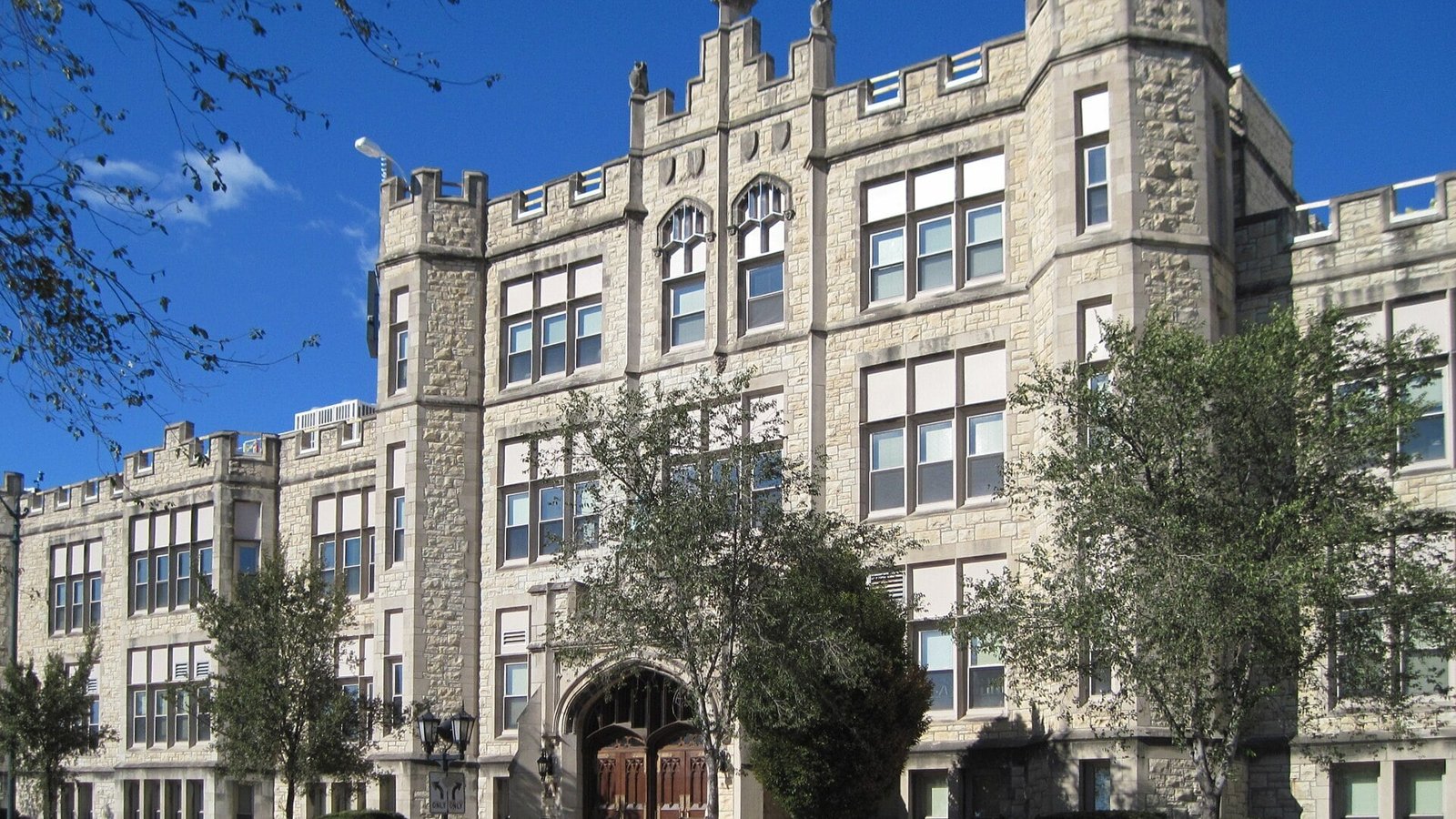
At Joliet Central High School in Illinois, every heating, ventilation and air conditioning (HVAC) system on a 550,000 sq ft campus had been running 24 hours a day, seven days a week, for years. CIM partner Aero Performance Group connected the school to PEAK through the ComEd Energy Efficiency Program's monitoring-based commissioning (MBCx) offering. The data made the problem plain, 21 air handling and rooftop units went back on occupancy schedules, and the savings were verified in under five months. Facility electricity use fell 35.5%, and the district paid nothing for the work.
At a glance
- 35.5%: reduction in facility electricity use (verified)
- 2,010,323 kWh and 3,839 therms: saved a year (verified)
- About US$225,000 a year: in utility costs (estimated)
- 21 units: air handling and rooftop units returned to scheduled operation
- US$0 to the district: the US$17,480 implementation was 100% funded by ComEd
- Under five months: from MBCx integration to verified savings
The challenge
Joliet Central is a large, mixed-use campus: general classrooms, science labs, offices, a cafeteria, a field house and dedicated buildings for the school's Pathways programme. A mix of constant-volume and variable air volume (VAV) air handling units and rooftop units serves the site, all controlled by a central building automation system (BAS).
Nobody had set out to run the school around the clock. Two things had made it the default. The BAS had no integrated scheduling function, so the facility team had no way to set time-of-day control. And years earlier, after a coil-freezing incident, a previous operations team had disabled schedules and moved to full-time operation as a precaution.
The precaution protected the coils. It also meant the building heated, cooled and ventilated empty classrooms every night, every weekend and through every holiday, long after anyone remembered why.
What the data showed
Once Aero connected the campus to PEAK, the trend data showed every HVAC system running continuously, with no difference between occupied and unoccupied hours. That is exactly the kind of pattern a fault detection and diagnostics (FDD) platform is built to surface: not a broken component, but equipment doing something nobody asked it to do.
Aero then compared the BAS trends with the school's historical ComEd meter data. The meter history confirmed that 24/7 operation had persisted for several years, and it sized the opportunity before any work began. That matters in an MBCx programme: the business case is clear up front, and there is a measured baseline to verify savings against later.
The fix
The solution addressed both causes. The district's controls contractor added a scheduling tool to the BAS, and Aero worked with the building management team to set up custom occupancy schedules around academic, athletic and extracurricular use.
Aero also verified that the BAS included freeze protection sequences for coils and other critical components. That removed the original reason for running around the clock and gave the facility team the confidence to return to time-of-day control.
The real test came in extreme cold. During post-implementation observation, the equipment held a new unoccupied space temperature setpoint, protecting the building without reverting to full-time operation.
Verified, not assumed
The work moved from MBCx integration in July 2025 to implementation in October 2025 and verified savings in November 2025. The 2,010,323 kWh and 3,839 therms a year are verified results, not engineering estimates of what the new schedules should save. The US$225,000 annual cost saving is an estimate based on those verified quantities.
This is the step many energy projects skip. A schedule change is easy to make and just as easy to undo: an override left in place, a contractor reverting a setting, a cold snap that tempts someone back to 24/7. Continuous monitoring keeps checking the fix in the data after the project is signed off, so a reversion shows up as a new alert rather than a slow creep back up the utility bill.
Why this model works
The utility pays, the partner delivers, the school keeps the savings. Utility-funded MBCx programmes such as ComEd's cover the cost of finding and fixing operational waste. At Joliet Central, ComEd funded 100% of the US$17,480 implementation, and the simple payback before incentives was under one month. For a school district with tight budgets and no appetite for capital projects, that removes the main barrier to acting.
Partners run the service on PEAK. Aero runs its MBCx service on PEAK: the platform watches the building data continuously, and Aero's engineers decide what to fix, work with the site team and verify the result. You can read Aero's own account in their Joliet Central High School MBCx case study, and how the partnership works in Aero Performance Group's success with PEAK.
Schools are where this matters most. According to ENERGY STAR, US K-12 districts spend more than US$8 billion a year on energy, and more than 30% of that energy is wasted. Long operating hours, varied schedules and old workarounds make schools a natural fit for MBCx. For another school example, see how a failed school chiller was caught while the BAS front-end was down. To understand where MBCx sits alongside other approaches, read Cx, RCx and MBCx compared and how engineering firms run RCx and MBCx on FDD.
Results
- Years of 24/7 HVAC operation identified from BAS trend data and confirmed against historical utility meter data
- 21 air handling and rooftop units returned to occupancy schedules, with freeze protection verified
- Facility electricity use down 35.5%, with 2,010,323 kWh and 3,839 therms a year in verified savings
- About US$225,000 a year in estimated utility cost savings
- Implementation 100% funded by ComEd, at no cost to the district
- Under five months from MBCx integration to verified savings
Run an RCx or MBCx practice? Our RCx Provider's Guide to Scaling MBCx covers how firms like Aero build utility-funded MBCx services on PEAK.