Introduction
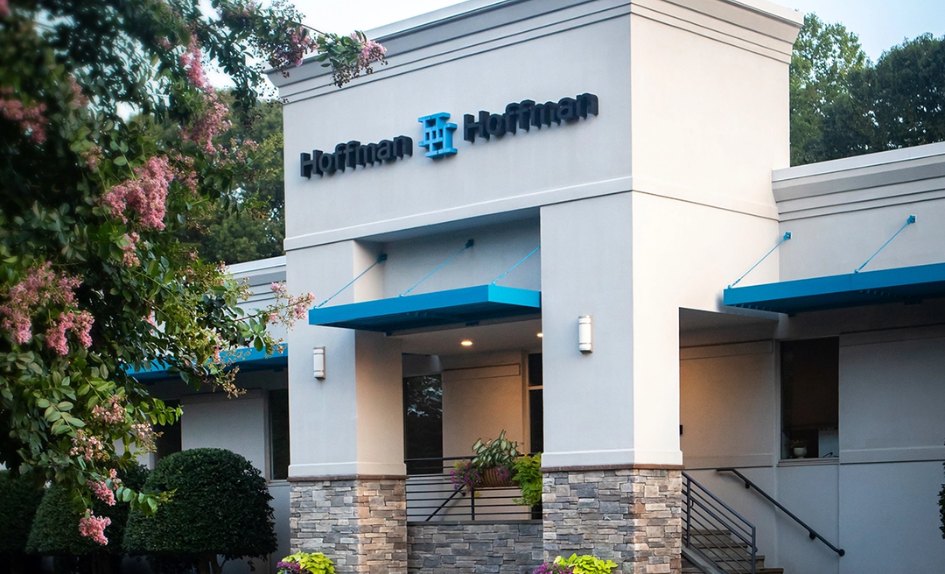
Hoffman Building Technologies (HBT) deployed CIM's automated fault detection and diagnostics (AFDD) across its 180,000 sqft Charlotte headquarters and warehouse facility to demonstrate how a technology-enabled, data-driven operating model can improve building performance, efficiency, visibility and accountability. Powered by CIM, the first 6 months of deployment have already delivered significant value, with the site now serving as a live showcase of how HBT can deliver scalable AFDD-driven optimization for its own clients.
Deployment snapshot
- 20 days for full site coverage
- 1,000+ points streaming every 15 minutes
- 36 million data points captured annually
- 576 FDD rules deployed
- 63 items of equipment monitored
- 37 thermal zones
- 229 alerts identified in first 6 months
Speed to improved visibility
Rapid and seamless deployment was a priority. Full onboarding and rule configuration were completed in under 20 days, despite the scale and complexity of the 180,000 sqft site. Once live, the platform began capturing over 1,000 data points every 15 minutes, creating near real-time insight across all major plant and equipment. Within weeks, HBT had moved beyond reactive building management to proactive data-driven performance automation.
The depth of integration provided immediate visibility across 37 thermal zones and 63 critical items of equipment, spanning air handling units, boilers and heat pumps; chilled and hot water systems; heat recovery units and heat exchangers; packaged AC units, VAVs and VSDs; utility metering and more.
The deployment has established a consolidated view of equipment health, utility consumption, and supply chain performance. With seven active users working from a shared source of truth, issues are validated with data, historical trends are readily accessible, and accountability extends across internal teams and external contractors. Performance can now be tracked consistently across all systems, enabling clearer benchmarking and more informed decision-making.
Optimized detection-to-resolution workflow
During the initial phase, 229 alerts were identified across HVAC systems. These ranged from scheduling inefficiencies and boiler setpoint optimisation to recommissioning issues that would have likely otherwise have remained hidden.
Examples of improvements include:
- Boiler setpoint optimization
- Run-hour and schedule correction
- Identification of poor commissioning conditions, including heating valves at 100% and pumps operating unnecessarily
- Correction of AHU fan inefficiencies
The structured, closed-loop workflow ensures issues move from detection through to verified resolution, embedding accountability into daily operations rather than relying on manual follow-up.
Operational improvements have translated into tangible performance gains. On a single AHU, corrective action delivered a 58% reduction in fan power, 17.5 kWh saved per day or 6,388 kWh as an annualized energy reduction. Beyond energy savings, the site now maintains thermal comfort compliance of more than 85%, supporting improved occupant experience and reduction in comfort-related complaints.
A live demonstration of scalable FDD delivery
HBT’s Charlotte HQ now operates as a proof point for how structured FDD deployment can rapidly transition a complex facility from reactive maintenance to a technology-enabled, data-driven operating model.
By combining deep technical expertise with AI-powered analytics, powered by CIM, Hoffman Building Technologies is not only optimizing its own facility but also equipping its sales team with a compelling, real-world example of how FDD can unlock energy savings, operational efficiency and sustained building performance for clients across its portfolio.